Sea, food & rhythm
What a normal week feels like — and the practical stuff that makes it work.
Patras Carnival
Every winter the city hands itself over to the Patras Carnival — the biggest and oldest carnival in Greece, and one locals will happily tell you rivals anywhere in the world. It runs from 17 January to Clean Monday, the first day of Lent, so the weeks before Lent become one long, rolling party.
- It opens on the first Saturday after 17 January: the mayor declares the carnival from the Apollon theatre balcony in King George I Square, and the citywide treasure hunt starts that same night.
- It builds through weeks of balls, concerts and open-air parties, plus a children's carnival and a night parade of carnival groups.
- It peaks on the last Sunday with the Big Parade of floats through the centre, then closes that evening with the Carnival King burned at the Agios Nikolaou pier by the harbour.
Local tipBook early for the final weekend — people come from all over Greece. Dates move each year with Orthodox Easter, so check the official carnival site before you plan around it.
You'll often hear it called one of the biggest carnivals in the world. The claims we can actually source rank it as Europe's largest — either way, it's the largest in Greece.
What to do in Patras
The main sights sit in two areas — the Neoclassical centre around Georgiou I Square and the upper district of Ano Poli — with the castle on the hill between them. Most of it fits into a day on foot.

Avenues that run straight to the sea
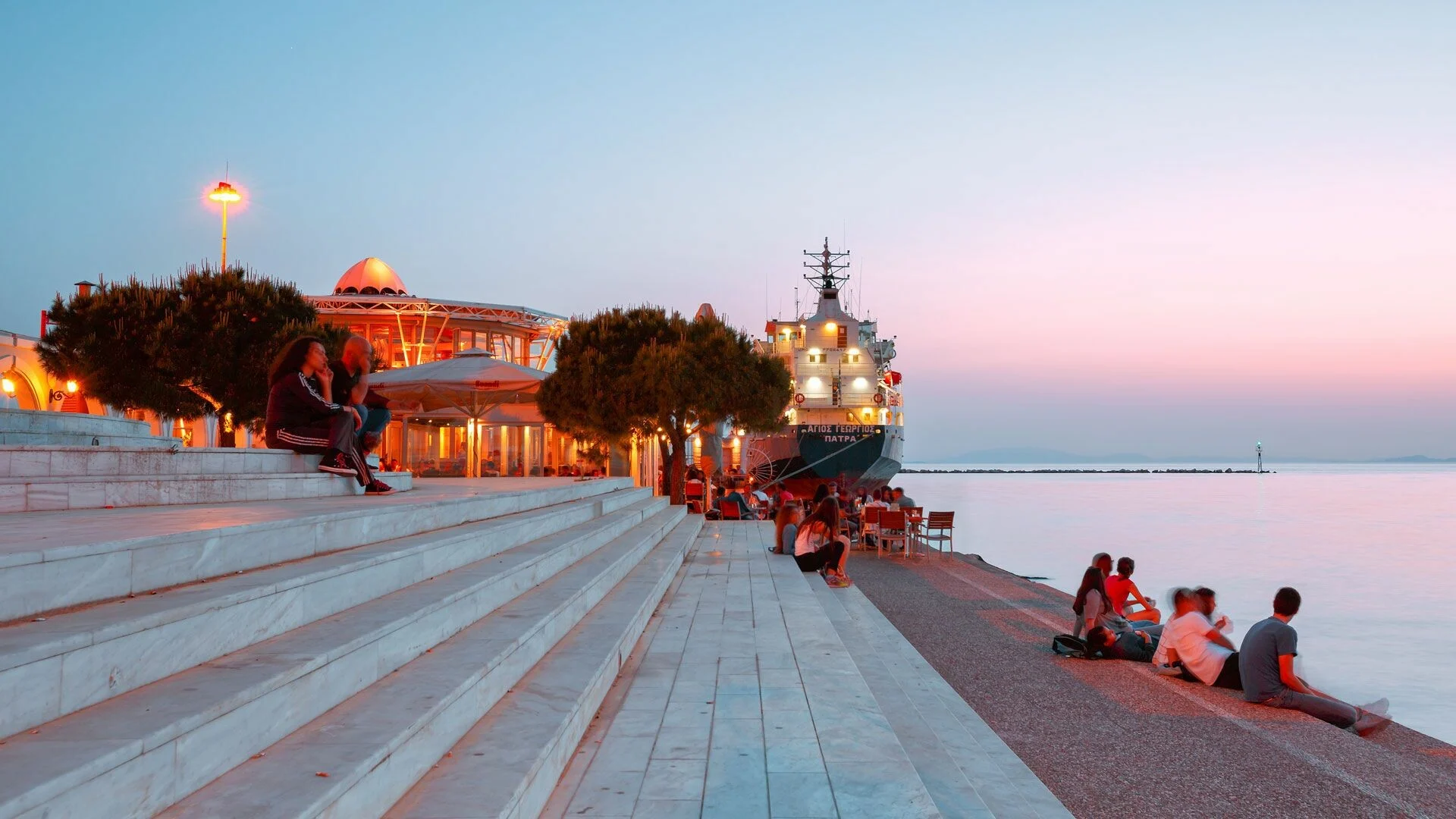
Evenings by the water
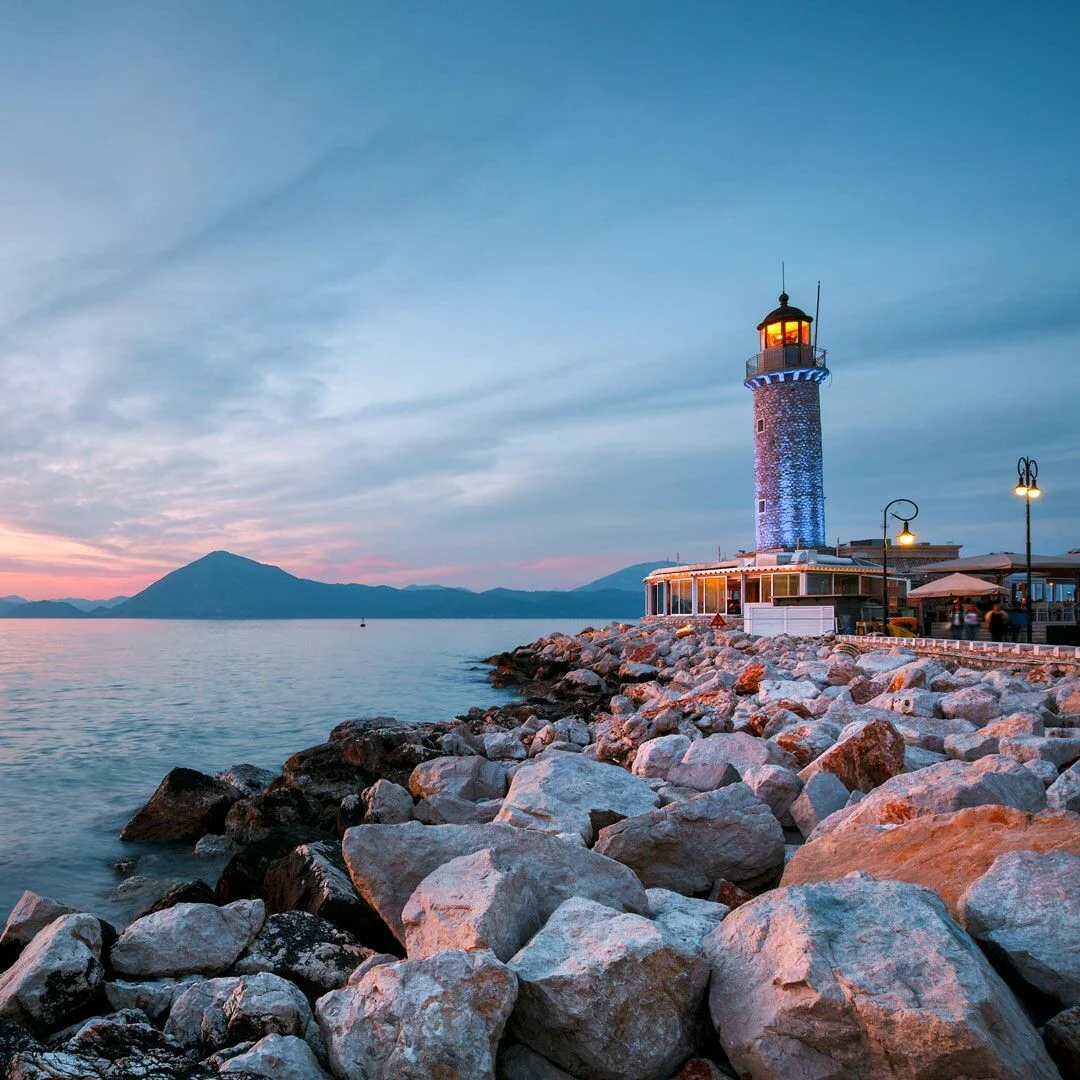
The Patras lighthouse
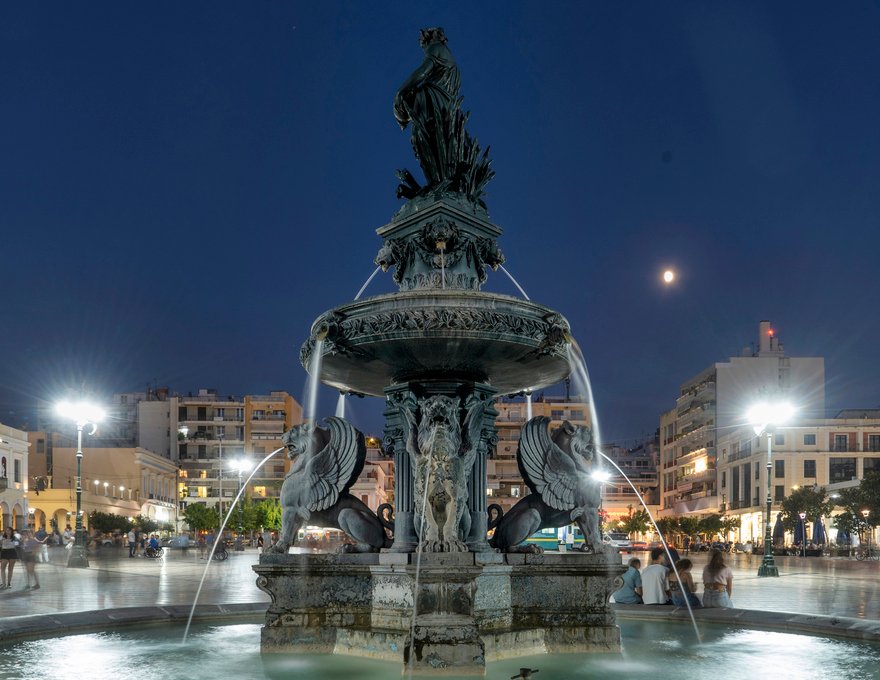
Georgiou by night
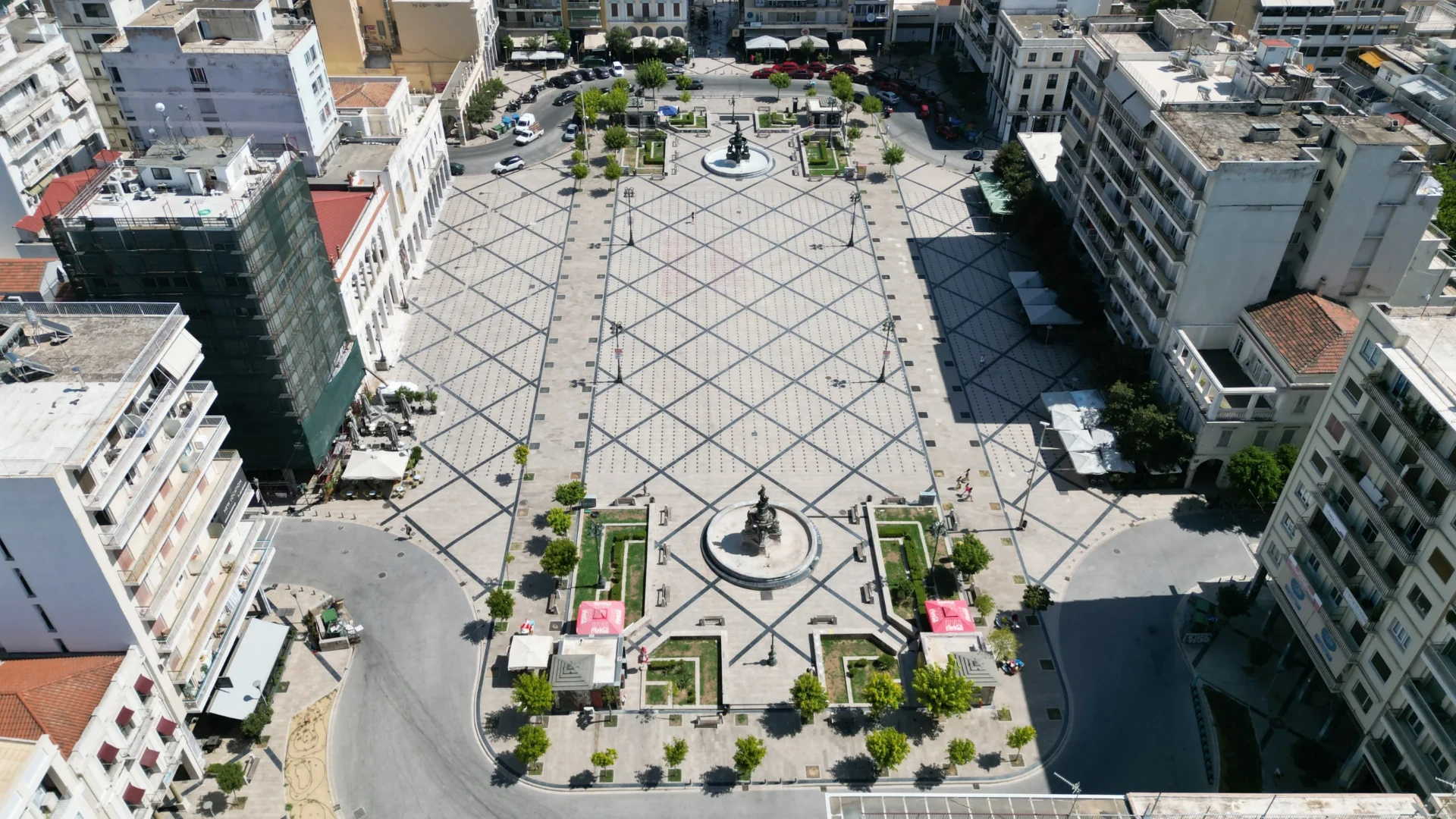
Georgiou I Square
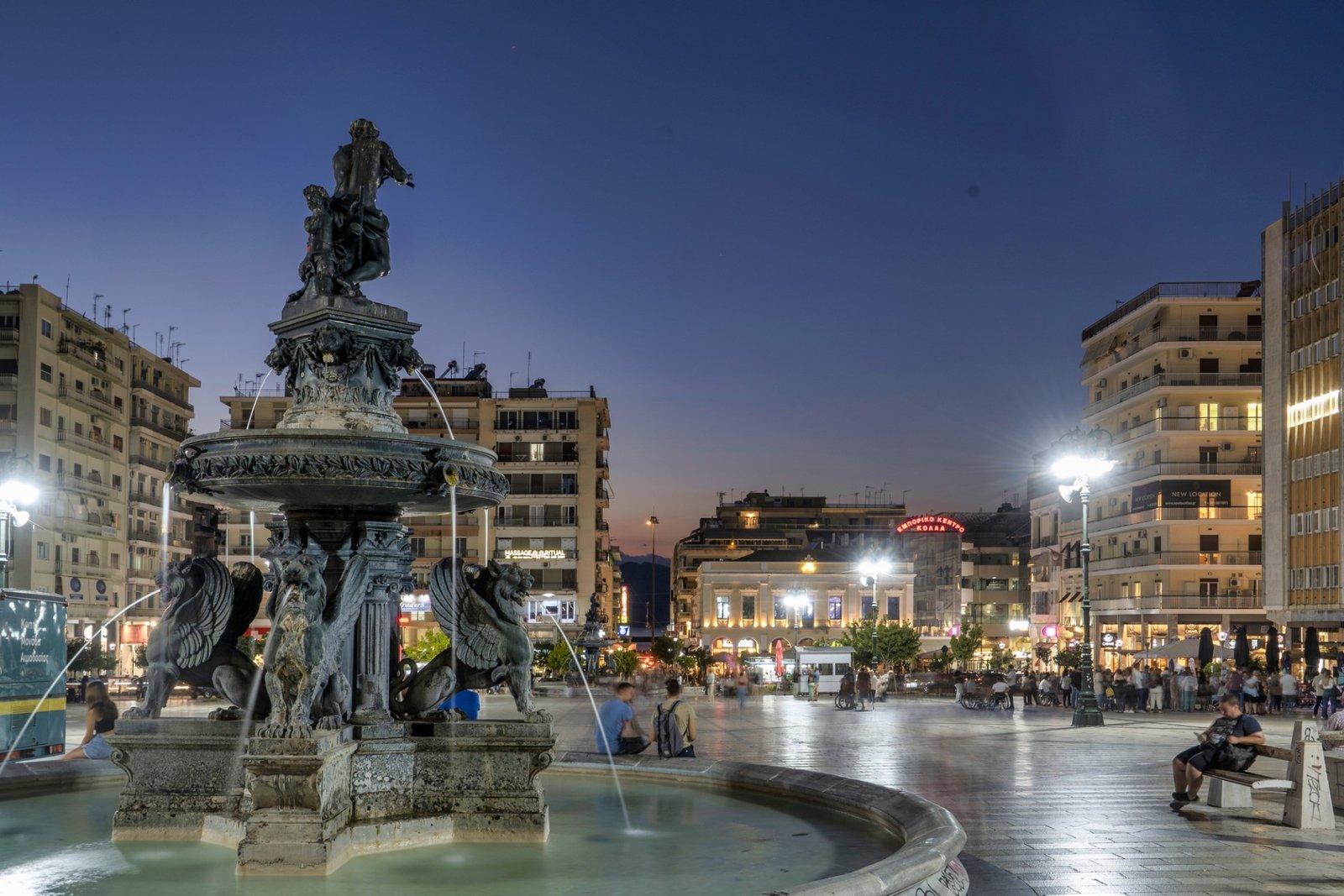
Blue hour at the lions
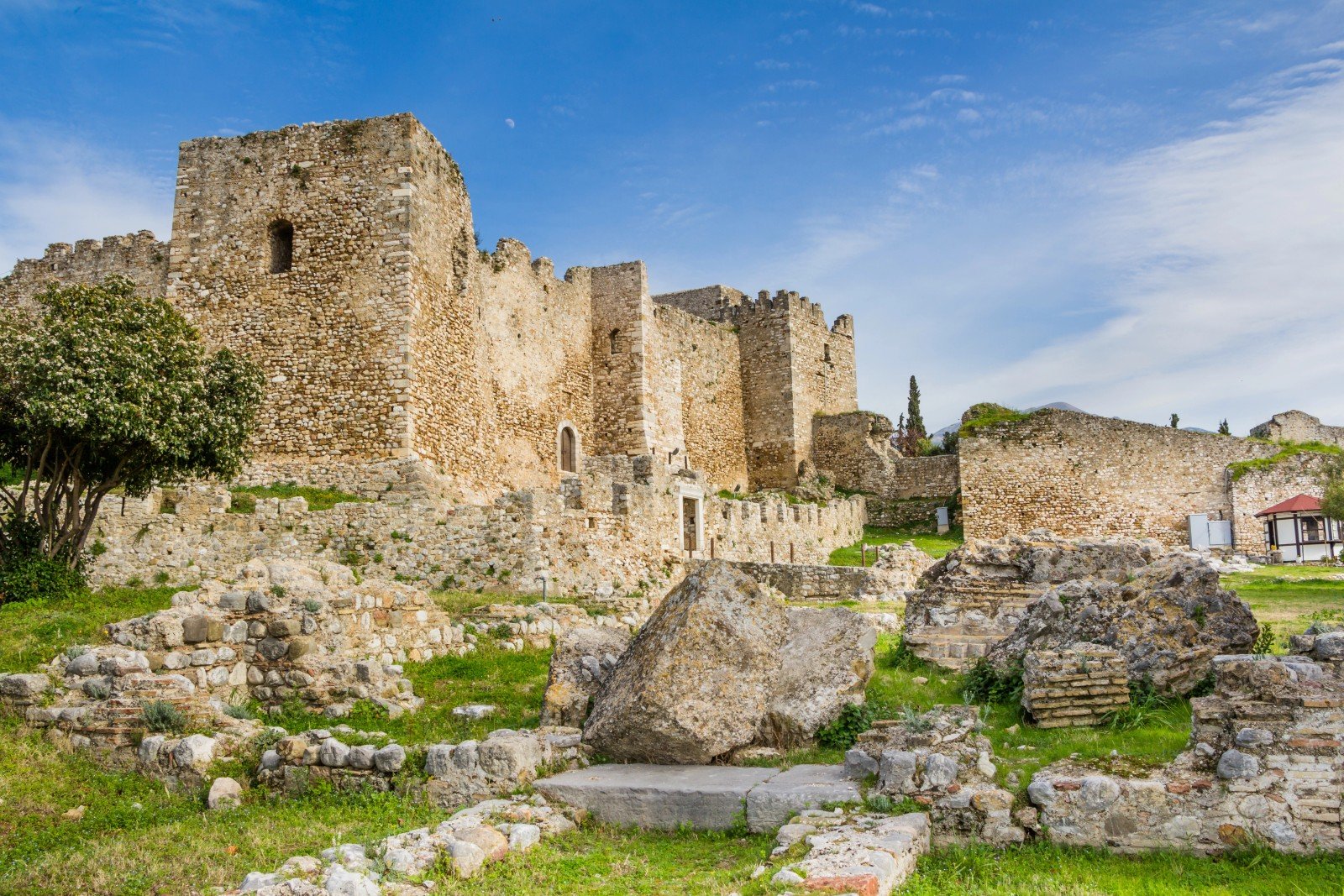
Patras Kastro
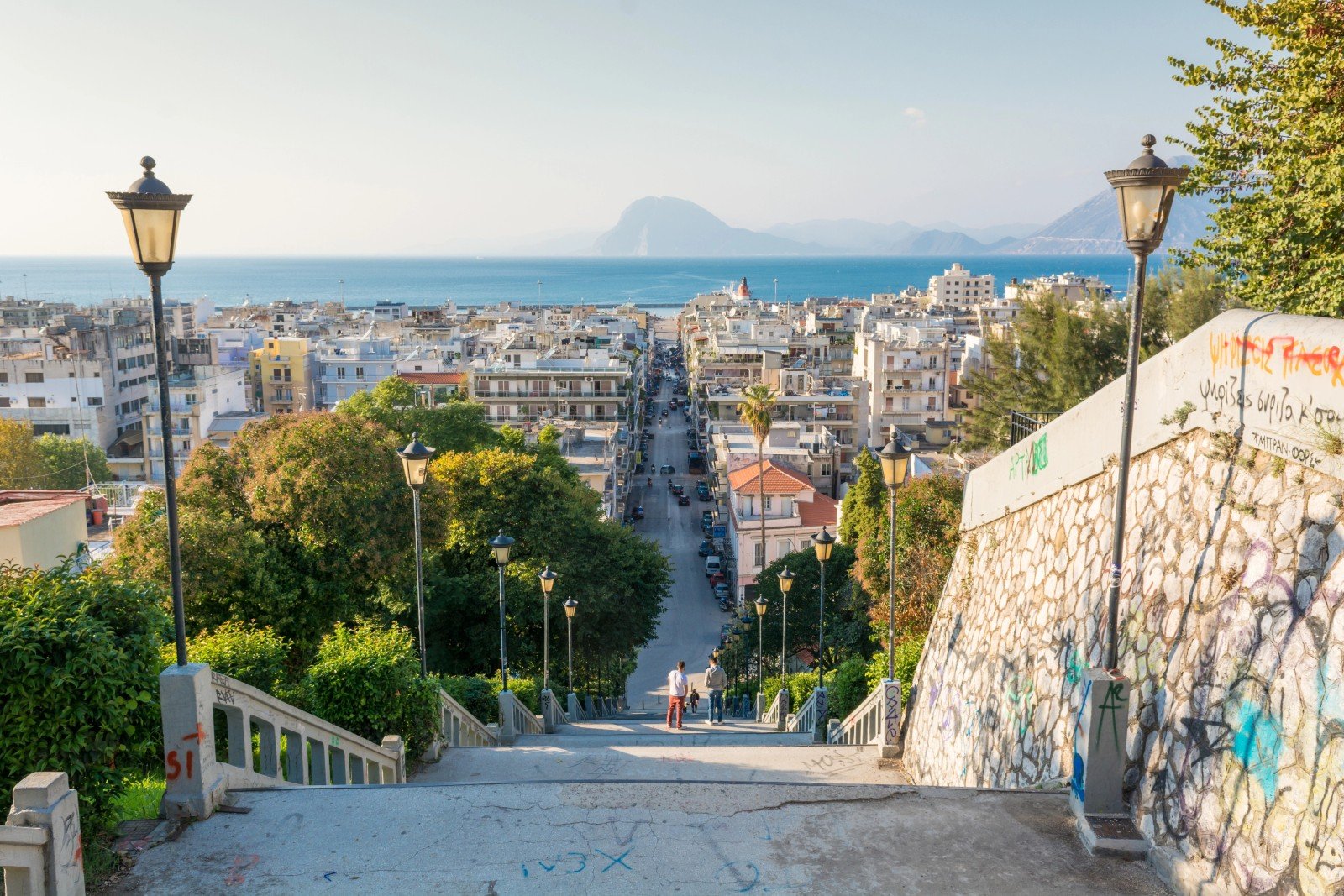
The old steps down to the port
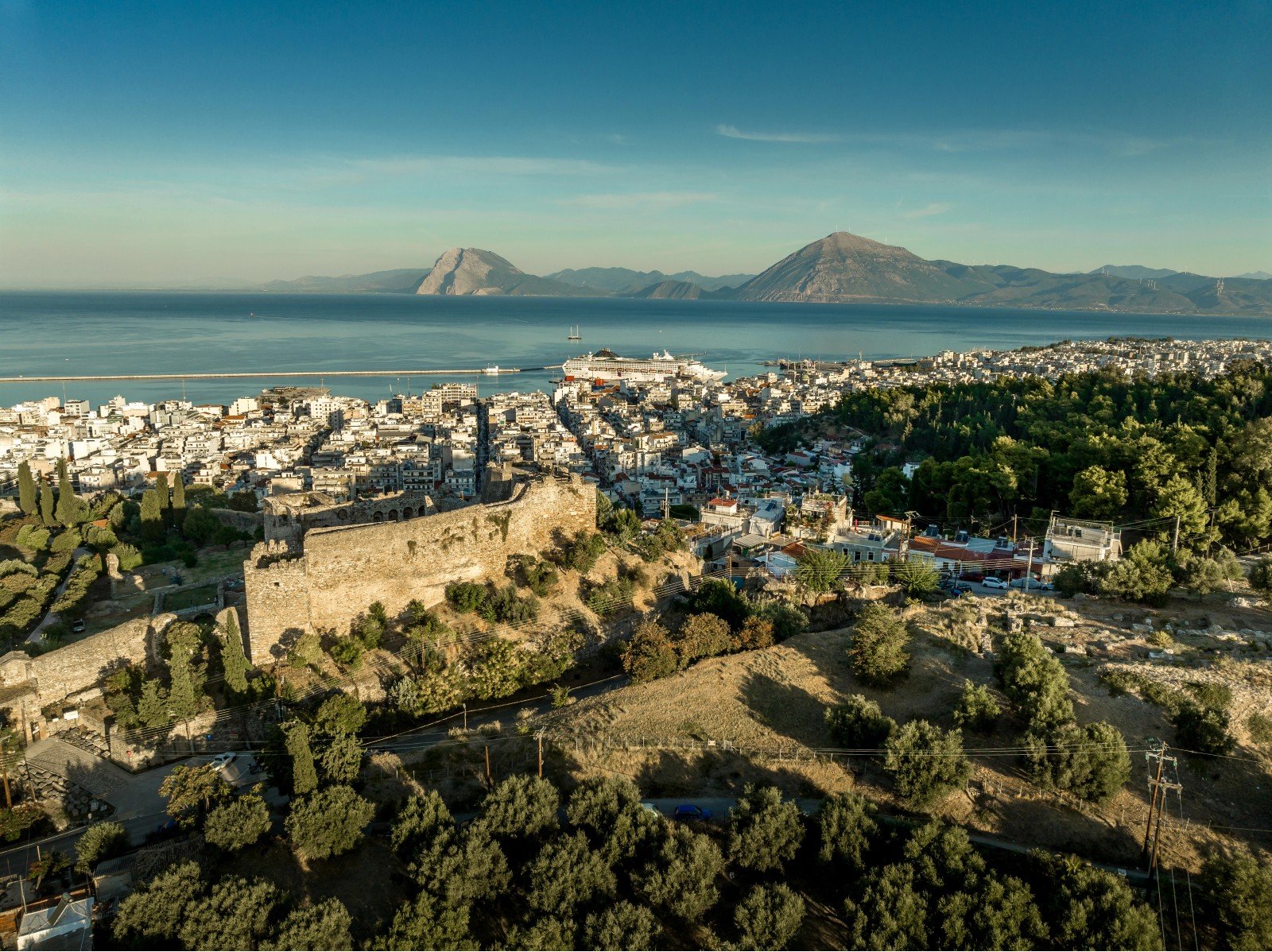
The castle from the ridge
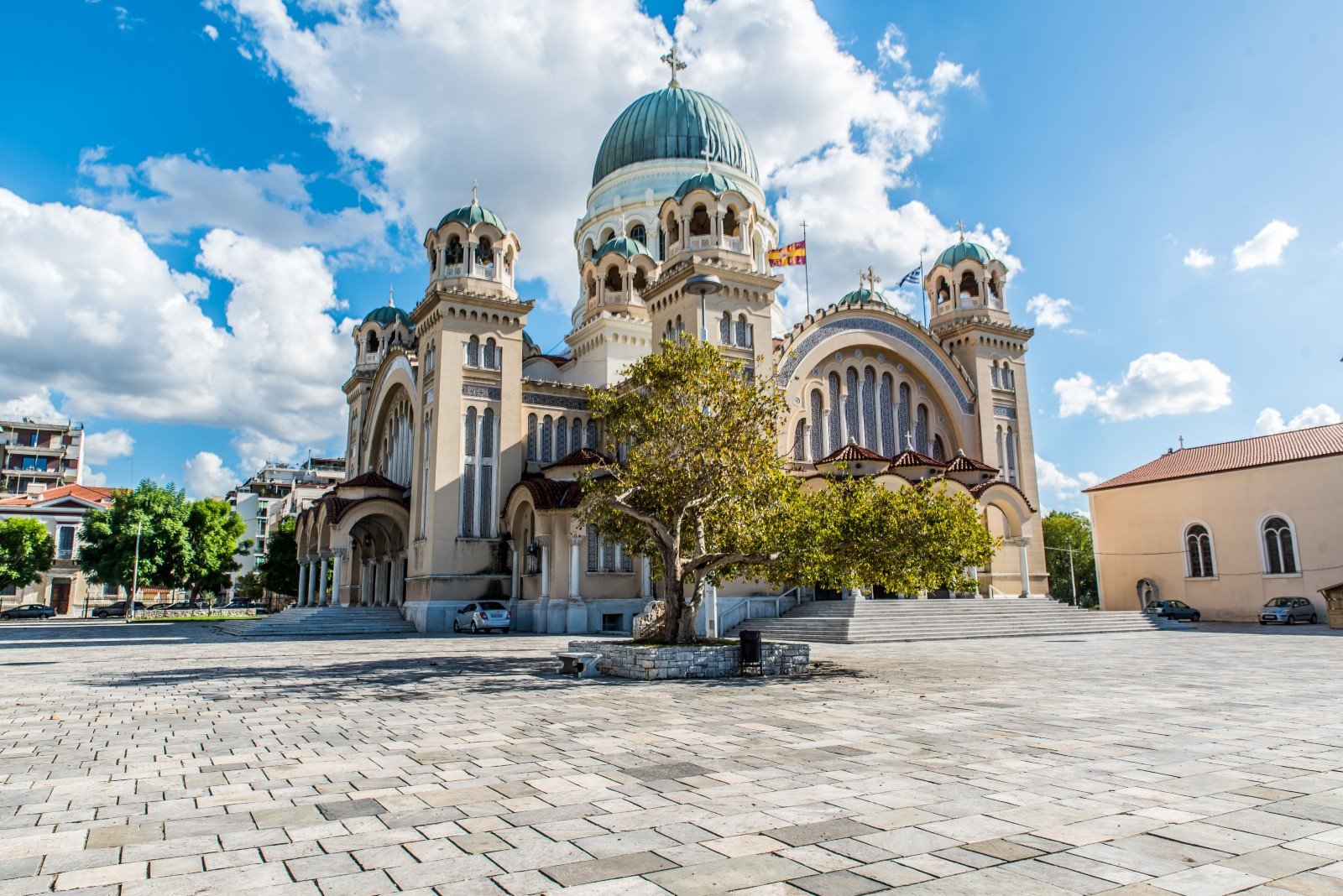
Basilica of St Andrew
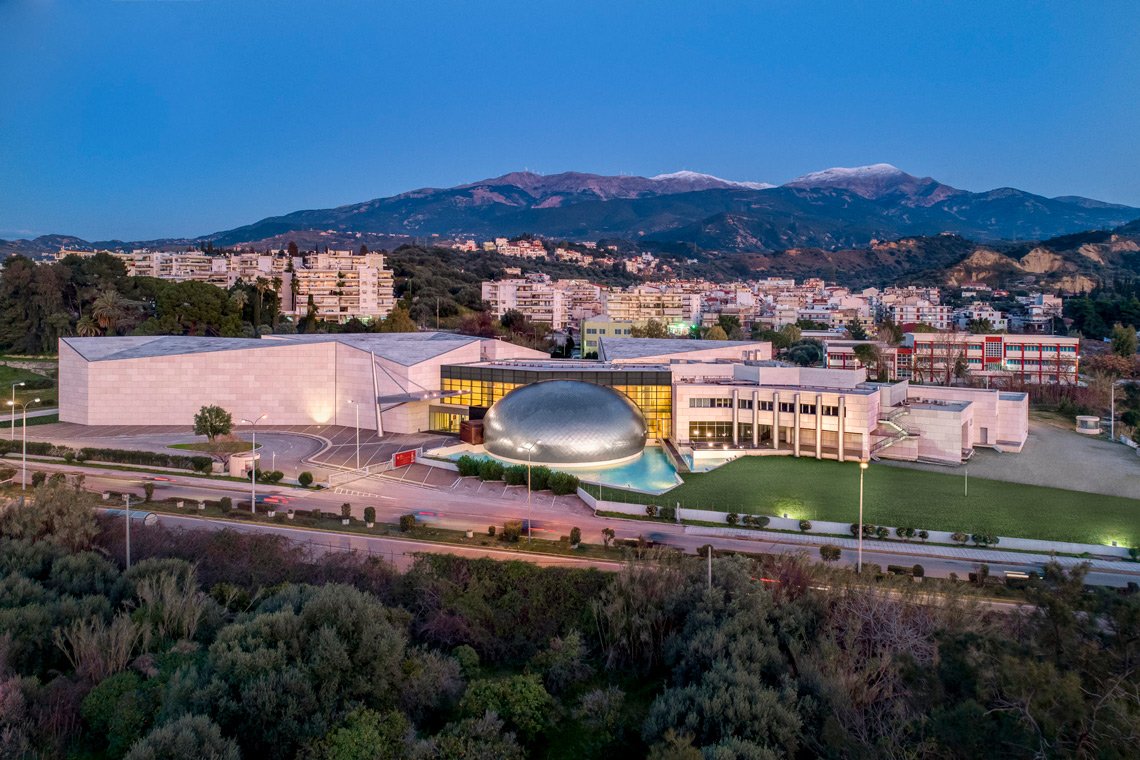
Archaeological Museum of Patras
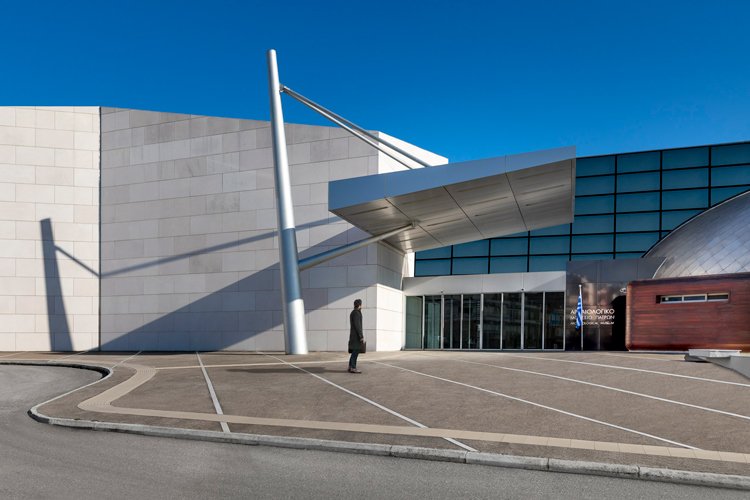
The entrance
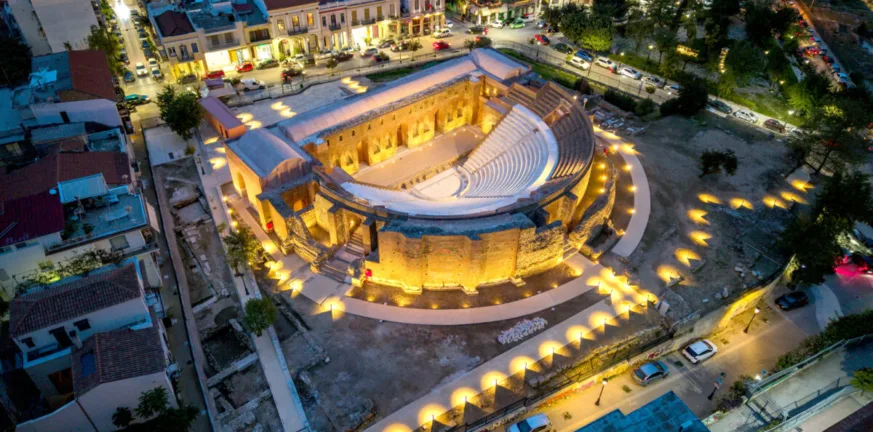
Roman Odeon
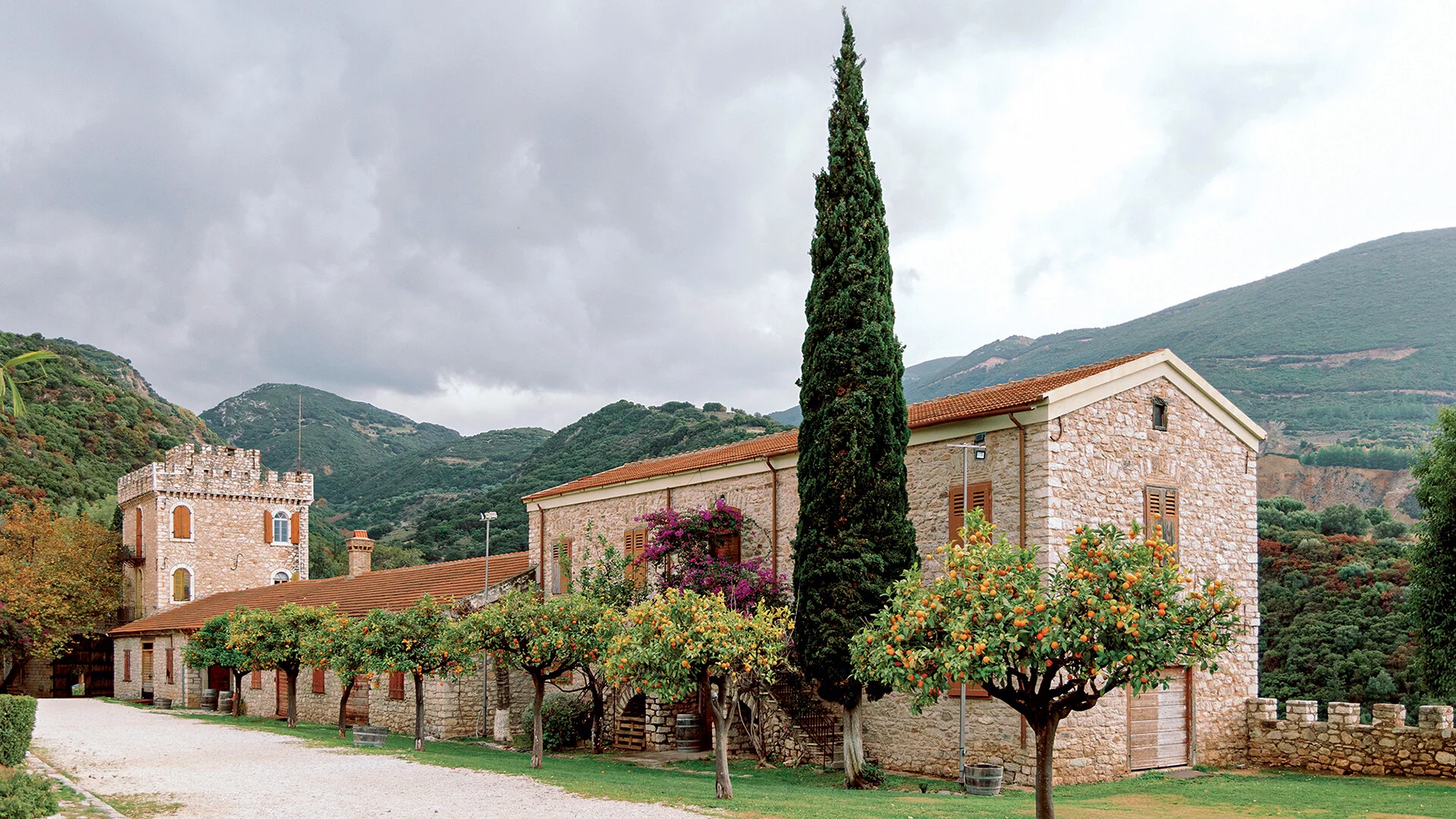
Achaia Clauss
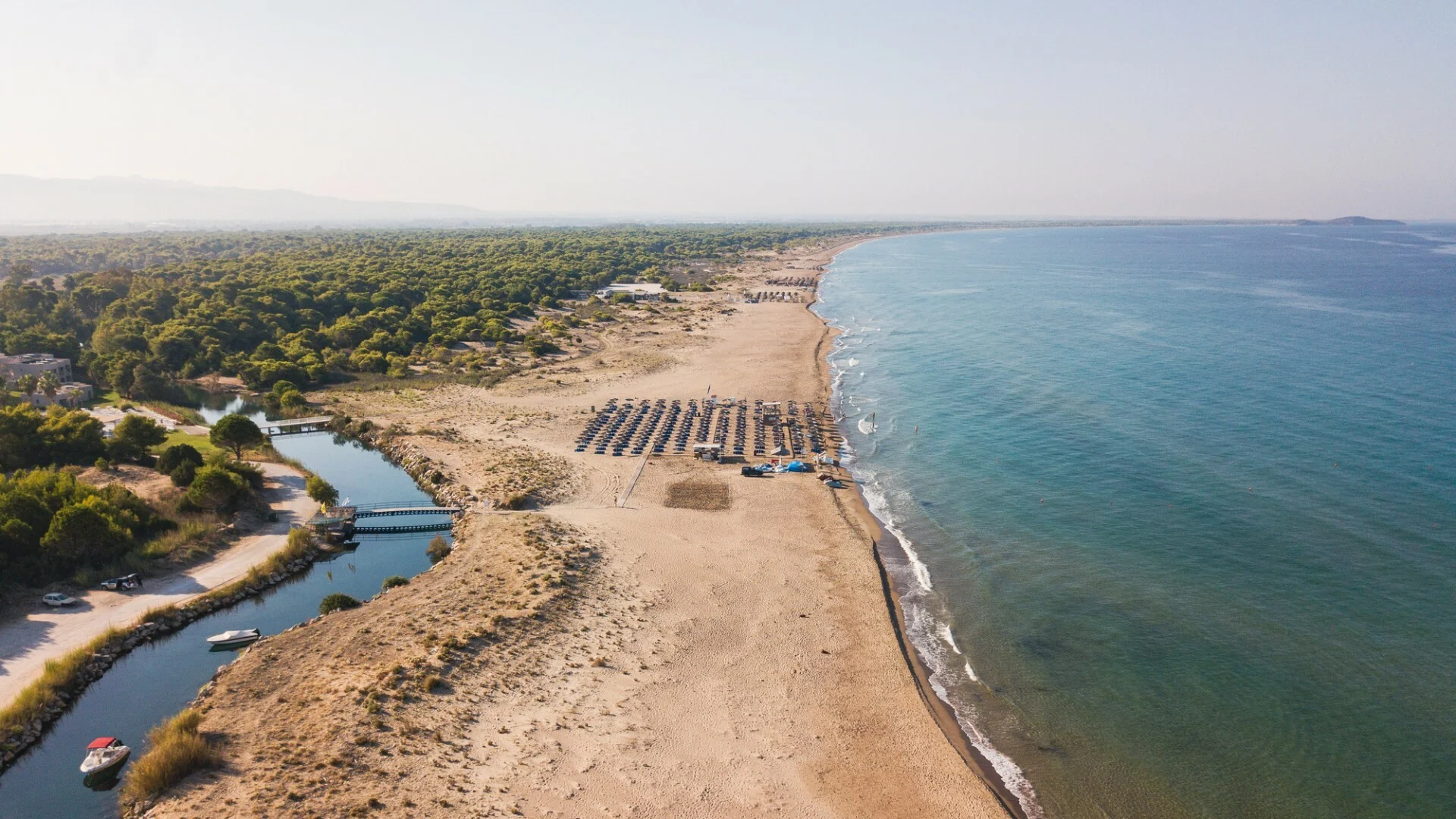
Kalogria Beach
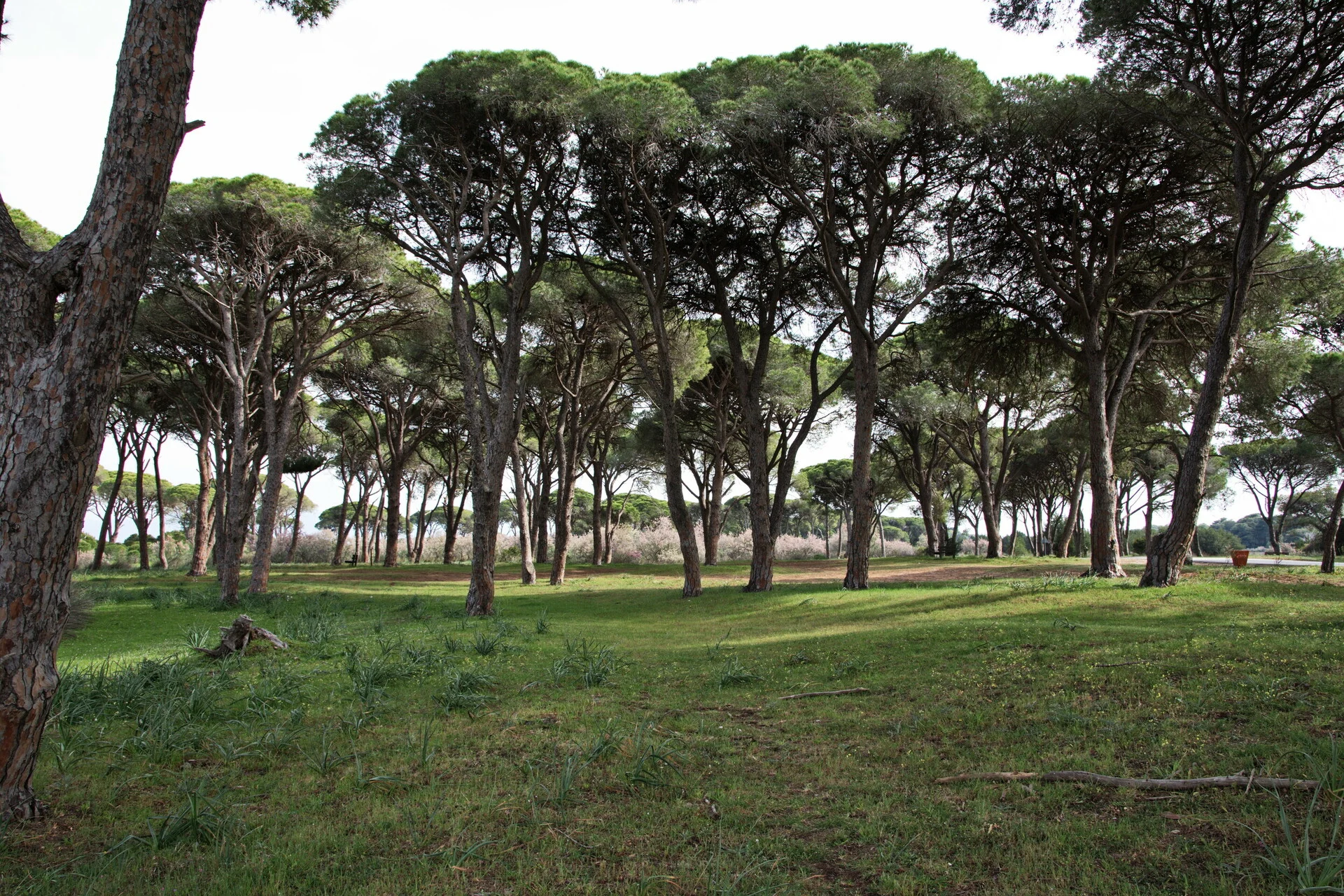
Strofylia Forest
Also nearby
- Carnival Museum: free, near the waterfront, and the story of the city's biggest party.
- Around the square: the pedestrian Agiou Nikolaou street, off Georgiou, fills with bars and tavernas from early evening.
Local tipLocal taste: Patras is known for Mavrodaphne, a sweet dessert wine, and aromatic Patras Muscat. Locals favour the tavernas of Ano Poli and the fish restaurants by the north port.
Note: the old funicular that once linked the centre to the upper town is currently out of service — check locally whether it's back. Opening hours shift with the season, so confirm before you go.
Getting around the city
The centre is compact and walkable, with the upper town on the hill above. City buses and taxis cover the rest; a bike or scooter is handy along the flat seafront.
More in Getting Here & Around.
Safety
Use the same common sense as in any port city: watch your belongings in busy areas and at the port. Greece's emergency number is 112.
Healthcare
Patras has public hospitals, including the University General Hospital, plus private clinics and pharmacies (look for the green cross). EU citizens should bring an EHIC; others need private insurance.
General information only — not medical advice. Check your insurance coverage before you travel.
Residency basics
- EU/EEA citizens can live here freely but register after three months.
- Non-EU citizens need a visa or permit for longer stays, such as the digital nomad visa.
- A Greek tax number (AFM) is needed for leases, utilities and contracts.
Not legal advice — always confirm with official sources or a lawyer.
Community & culture
With a large university, Patras has a young, social energy all year — students, academics and people who moved here from elsewhere. Carnival season is when that energy becomes impossible to miss.
Local tipLearn a few Greek words — "kaliméra" (good morning) and "efcharistó" (thank you) go a long way.
Join the community WhatsApp group — link on the Contact page.
Seasons
- Summer: hot, with long beach evenings. Many locals leave in August.
- Spring & autumn: mild and often the nicest time to settle in.
- Winter: cooler and rainier — good heating matters.
Keep reading
Rent, bills & the real budget
Spending categories, where people look for flats, and what to check before signing.
Read the Cost & Housing guide →Work SetupInternet, coworking & cafés
Connectivity, places to work, and the admin side of working remotely.
Read the Work Setup guide →Getting Here & AroundArrival, transit & day trips
Ferries, buses, trains and trips like Kalavryta.
Read the Getting Here & Around guide →